SPC Research Into Refillable Packaging for Skincare
This research report explores consumer expectations and preferences for refillable skincare packaging.
An overview of PCRs and EPDs, and how the two are connected to packaging life cycle assessment (LCA).
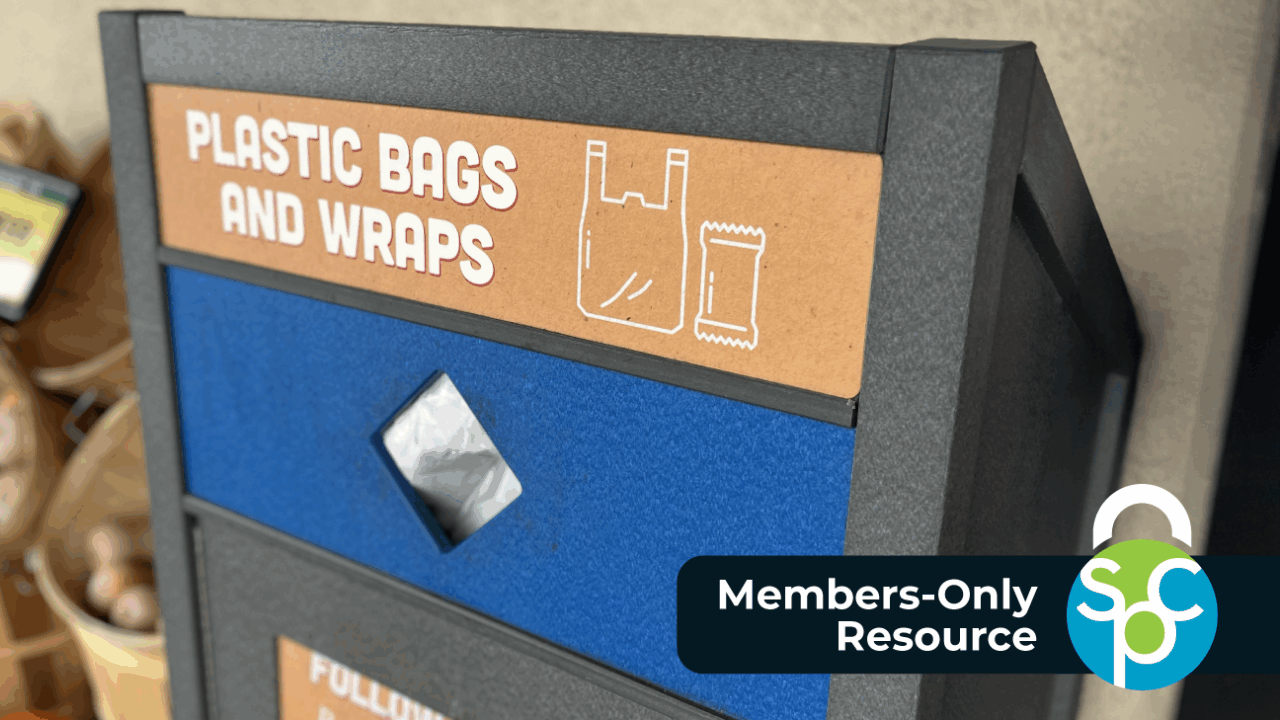
Insights into best practices for Store Drop-off programs to improve plastic film collection.
Explore EPR laws containing post-consumer recycled content (PCR) targets, eco-modulation, and source reduction.
Research shows narratives about recycled materials resonate powerfully with consumers.
Key considerations when choosing single-use packaging materials.
An overview of how Materials Recovery Facilities (MRFs) work, identifying the main challenges regarding acceptance of materials.
An update and expansion by SPC of its dataset of residential access to composting programs.
An analysis of important shifts in policy and innovation trends that impact material health and selection, reuse implementation, and curbside collection of materials.
Designed to help companies drive successful, scalable reuse initiatives.
Reuse is more than just an environmental option for sustainable packaging – refillable and returnable packaging will be a key strategy for lowering costs, complying with extended producer responsibility schemes, and driving business growth.
Assesses myths and trade-offs around packaging from alternative fibers.
A resource designed to explain chemical recycling technologies relevant to packaging.
This trends report calls attention to innovations we’re seeing from both our Member companies and the international packaging community.
A hub of sustainable resources, collated by the Sustainable Packaging Coalition.
This Reuse Innovations Database showcases returnable and refillable packaging solutions from around the world.
This short resource provides a single point of reference for terminology and acronyms frequently used when discussing life cycle assessment, environmental trade-offs, carbon footprints, and related topics.
Provide an overview of policy, industrial composting and compostables in the EPR programs across the five states that had passed packaging EPR.
The principles of sustainable packaging aid the value chain in approaching sustainable packaging systematically, minimizing negative impacts, while improving performance and purpose.
This guide to recycled plastics aims to empower brands and their suppliers with an expanded knowledge of policy and legislation.
This guide to recycled plastics aims to empower brands and their suppliers with the knowledge to improve sourcing of recycled plastic.
This guide to recycled plastics aims to empower brands and their suppliers with the knowledge necessary to expand usage of recycled plastic.
Reduce food waste at the consumer and retailer levels by prioritizing food waste prevention and deploying the right packaging design.
Despite the benefits, flexible packaging is a challenge. Improved recovery is key to closing the loop for this material.
An introduction to paper packaging recyclability test methods & specifications to serve as a guide for overall packaging design.
Identify the differences between the various proposals while also developing a deeper understanding of the components of EPR policy.
The guide helps brands prevent problems down the road by evaluating which applications are the best fit for compostable packaging.
This guide provides a primer and resources for paper and paper-based packaging
Covering PCR Recycled Content, Chemical Recycling Legislation, EPR, Recovery and Policy.
Case studies of two quick-service restaurant (QSR) chains in Vermont & New York.
Covers currently available and in-development paper packaging design guides for recyclability.
This resource evaluates the current state of the Store Drop-off program and explores potential solutions and strategies to address the gaps identified.
The SPC does not support the use of any kind of degradability additives in packaging, including additives that seek to make packaging more degradable.
The Problematic Materials workstream worked with The Plastics Pact Activators to to eliminate problematic and unnecessary resins, components, and formats by 2025.
The SPC recommends that packaging companies do not use the term biodegradable to market their products to suppliers, retailers, or consumers.
The SPC recommends a definition of greenwashing to enable more fruitful conversations about environmental marketing, on-pack eco-labeling, and consumer education.
In the context of the SPC, packaging policy is a term referring to political efforts from governments, corporations, or other organizations working in the sustainable packaging field on a global scale.
To enable successful reusable packaging systems, the SPC believes in a holistic definition of reusable packaging that includes intentionality, system boundaries, and assured environmental benefit.
Chemical recycling refers to a spectrum of physical and chemical processes for transforming plastic or polymer waste into new products. Chemical recycling technologies fall under three main categories: purification, depolymerization, and conversion.
PCR Primer for Retail Teams focused in Policy, Purchasing, Sourcing, Design, and Product Development surrounding plastic packaging.
This EPR policy resource clarifies who is responsible for the covered product who is responsible for contributing to the financial, operational, or combined program.
Increased transparency around impacts, green chemistry principles, and collaboration to strengthen the entire. recycling system are crucial to the successful implementation of chemical recycling.
The circularity of hard-to-recycle plastics benefits from design for recyclability, improved infrastructure for collection and sortation, and increased demand pull from end markets.
Policy resource on what’s covered and what’s exempt in the United States under Extender Producer Responsibility (EPR) for packaging.
Applying the right solution to the appropriate packaging challenge will offer the best use of stakeholders’ resources.
This quick reference guide provides an overview of common acronyms and abbreviations that are frequently used at when discussing extended producer responsibility (EPR).
In this poicy resource, we provide an overview of eco-modulation in the EPR programs across the five states that have passed EPR laws, and it’s impact on packaging design.
Case studies leveraging Trayak’s screening LCA tool, EcoImpact-COMPASS, to measure environmental impacts associated with a packaging change.