

What Are Product Category Rules and Environmental Product Declarations?
An overview of PCRs and EPDs, and how the two are connected to packaging life cycle assessment (LCA).

An overview of PCRs and EPDs, and how the two are connected to packaging life cycle assessment (LCA).
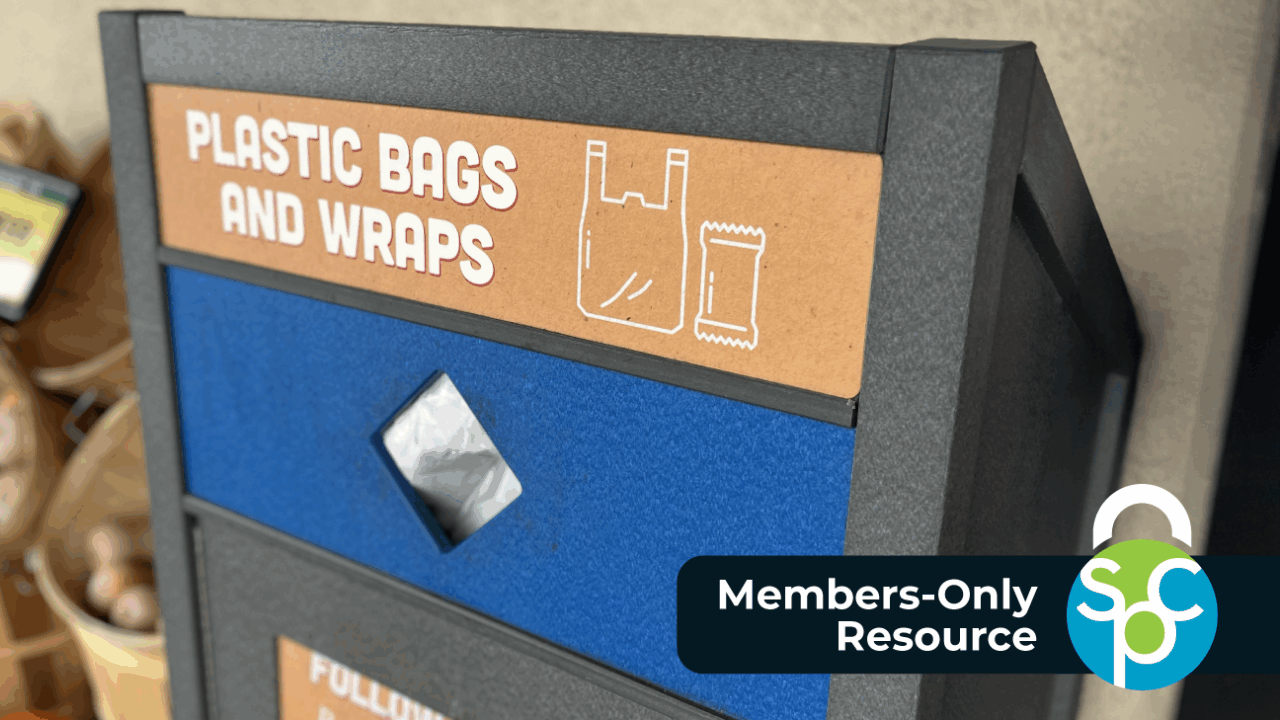
Insights into best practices for Store Drop-off programs to improve plastic film collection.

Explore EPR laws containing post-consumer recycled content (PCR) targets, eco-modulation, and source reduction.

An overview of how Materials Recovery Facilities (MRFs) work, identifying the main challenges regarding acceptance of materials.

Reuse is more than just an environmental option for sustainable packaging – refillable and returnable packaging will be a key strategy for lowering costs, complying with extended producer responsibility schemes, and driving business growth.

This short resource provides a single point of reference for terminology and acronyms frequently used when discussing life cycle assessment, environmental trade-offs, carbon footprints, and related topics.

Provide an overview of policy, industrial composting and compostables in the EPR programs across the five states that had passed packaging EPR.

The principles of sustainable packaging aid the value chain in approaching sustainable packaging systematically, minimizing negative impacts, while improving performance and purpose.

Despite the benefits, flexible packaging is a challenge. Improved recovery is key to closing the loop for this material.

Covering PCR Recycled Content, Chemical Recycling Legislation, EPR, Recovery and Policy.

This EPR policy resource clarifies who is responsible for the covered product who is responsible for contributing to the financial, operational, or combined program.

Increased transparency around impacts, green chemistry principles, and collaboration to strengthen the entire. recycling system are crucial to the successful implementation of chemical recycling.

The circularity of hard-to-recycle plastics benefits from design for recyclability, improved infrastructure for collection and sortation, and increased demand pull from end markets.

Policy resource on what’s covered and what’s exempt in the United States under Extender Producer Responsibility (EPR) for packaging.

Applying the right solution to the appropriate packaging challenge will offer the best use of stakeholders’ resources.

This quick reference guide provides an overview of common acronyms and abbreviations that are frequently used at when discussing extended producer responsibility (EPR).

In this poicy resource, we provide an overview of eco-modulation in the EPR programs across the five states that have passed EPR laws, and it’s impact on packaging design.