
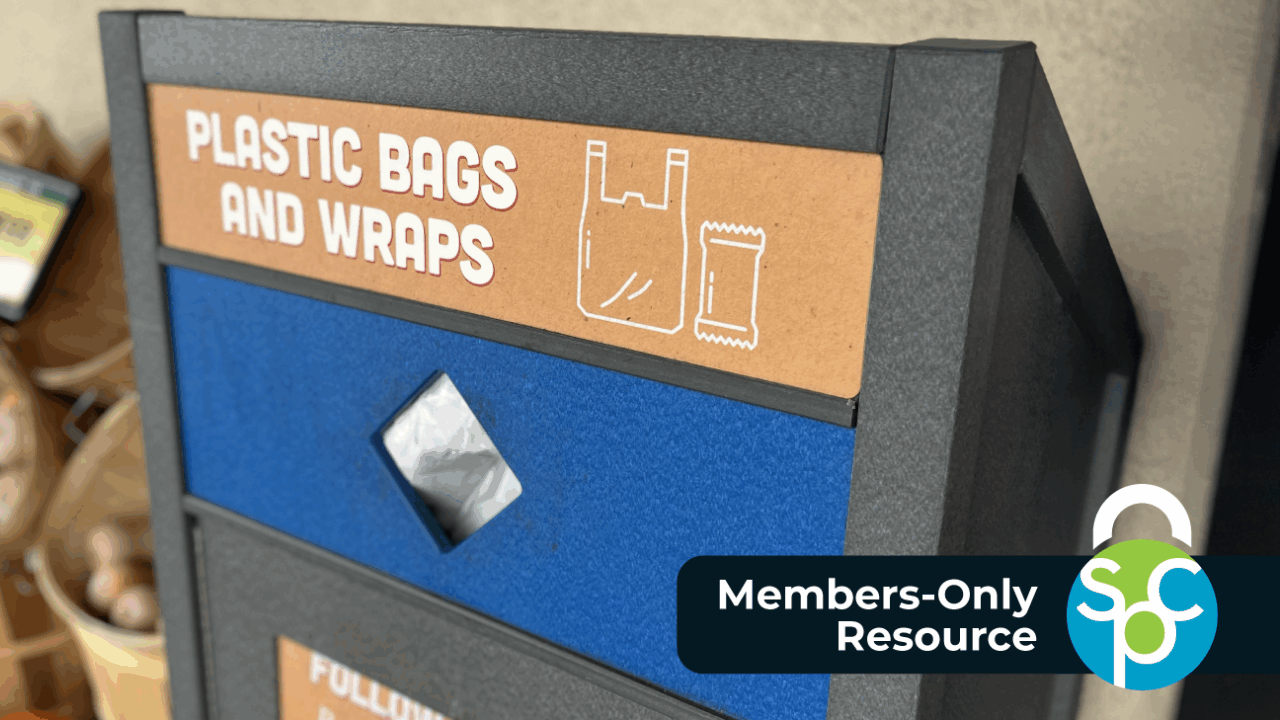
Retailers’ Guide: Collecting Plastic Film Through Store Drop-off
Insights into best practices for Store Drop-off programs to improve plastic film collection.

Insights into best practices for Store Drop-off programs to improve plastic film collection.

Designed to help companies drive successful, scalable reuse initiatives.

Reuse is more than just an environmental option for sustainable packaging – refillable and returnable packaging will be a key strategy for lowering costs, complying with extended producer responsibility schemes, and driving business growth.

A resource designed to explain chemical recycling technologies relevant to packaging.
A hub of sustainable resources, collated by the Sustainable Packaging Coalition.

This Reuse Innovations Database showcases returnable and refillable packaging solutions from around the world.

This guide to recycled plastics aims to empower brands and their suppliers with an expanded knowledge of policy and legislation.

This guide to recycled plastics aims to empower brands and their suppliers with the knowledge to improve sourcing of recycled plastic.

This guide to recycled plastics aims to empower brands and their suppliers with the knowledge necessary to expand usage of recycled plastic.

Despite the benefits, flexible packaging is a challenge. Improved recovery is key to closing the loop for this material.

The guide helps brands prevent problems down the road by evaluating which applications are the best fit for compostable packaging.

This guide provides a primer and resources for paper and paper-based packaging

Covering PCR Recycled Content, Chemical Recycling Legislation, EPR, Recovery and Policy.

This resource evaluates the current state of the Store Drop-off program and explores potential solutions and strategies to address the gaps identified.

The SPC does not support the use of any kind of degradability additives in packaging, including additives that seek to make packaging more degradable.

The Problematic Materials workstream worked with The Plastics Pact Activators to to eliminate problematic and unnecessary resins, components, and formats by 2025.