

How Food Residue Affects Paper Packaging Recyclability
Takeaways from SPC’s research into food residue’s affects on paper packaging recovery.

Takeaways from SPC’s research into food residue’s affects on paper packaging recovery.

The latest findings on consumer perceptions of home composting and home compostable packaging.
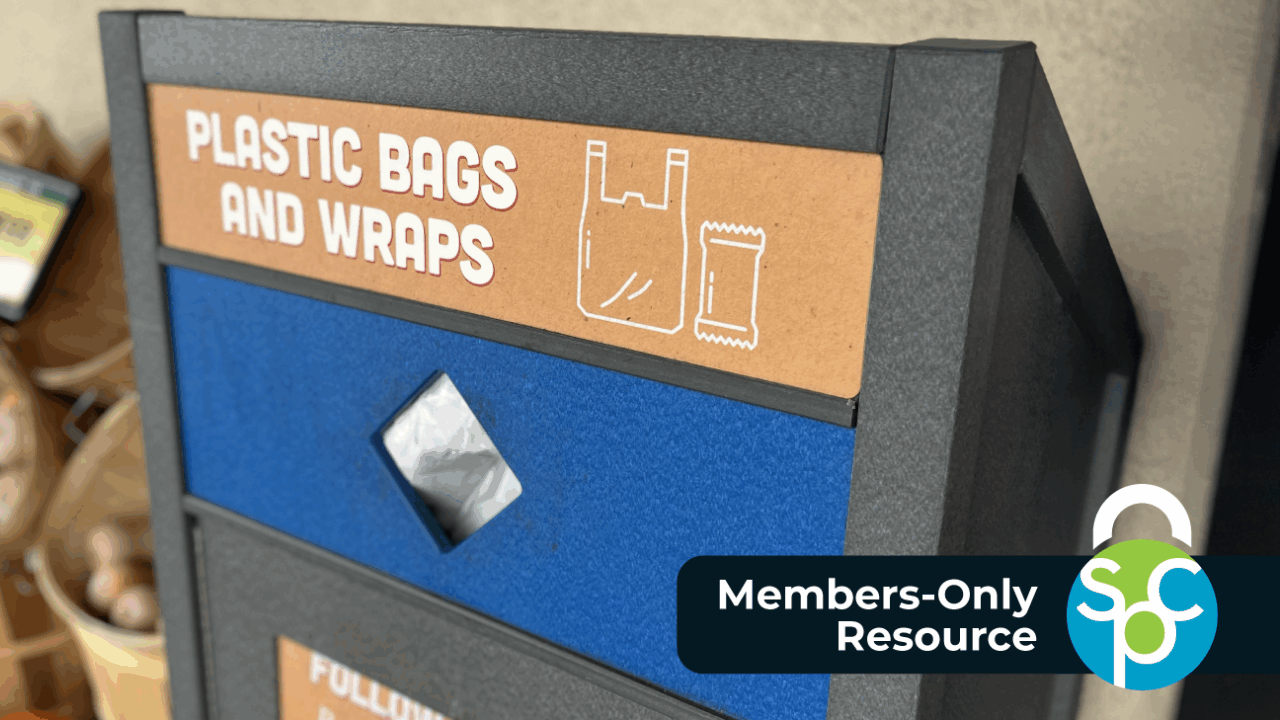
Insights into best practices for Store Drop-off programs to improve plastic film collection.

An overview of how Materials Recovery Facilities (MRFs) work, identifying the main challenges regarding acceptance of materials.

An update and expansion by SPC of its dataset of residential access to composting programs.

Designed to help companies drive successful, scalable reuse initiatives.

Reuse is more than just an environmental option for sustainable packaging – refillable and returnable packaging will be a key strategy for lowering costs, complying with extended producer responsibility schemes, and driving business growth.

A resource designed to explain chemical recycling technologies relevant to packaging.

This Reuse Innovations Database showcases returnable and refillable packaging solutions from around the world.

This short resource provides a single point of reference for terminology and acronyms frequently used when discussing life cycle assessment, environmental trade-offs, carbon footprints, and related topics.

The principles of sustainable packaging aid the value chain in approaching sustainable packaging systematically, minimizing negative impacts, while improving performance and purpose.

Reduce food waste at the consumer and retailer levels by prioritizing food waste prevention and deploying the right packaging design.

Despite the benefits, flexible packaging is a challenge. Improved recovery is key to closing the loop for this material.

An introduction to paper packaging recyclability test methods & specifications to serve as a guide for overall packaging design.

Covering PCR Recycled Content, Chemical Recycling Legislation, EPR, Recovery and Policy.

This resource evaluates the current state of the Store Drop-off program and explores potential solutions and strategies to address the gaps identified.