
The Recycled Content Claims Toolkit
A practical guide to building clear, credible, and compelling consumer-facing recycled content claims.

A practical guide to building clear, credible, and compelling consumer-facing recycled content claims.
Key data points from SPC’s consumer research into labels, film collection, composting, and more.

The latest findings on consumer perceptions of home composting and home compostable packaging.

Research into sustainable packaging practices in Hispanic communities.

This research report explores consumer expectations and preferences for refillable skincare packaging.
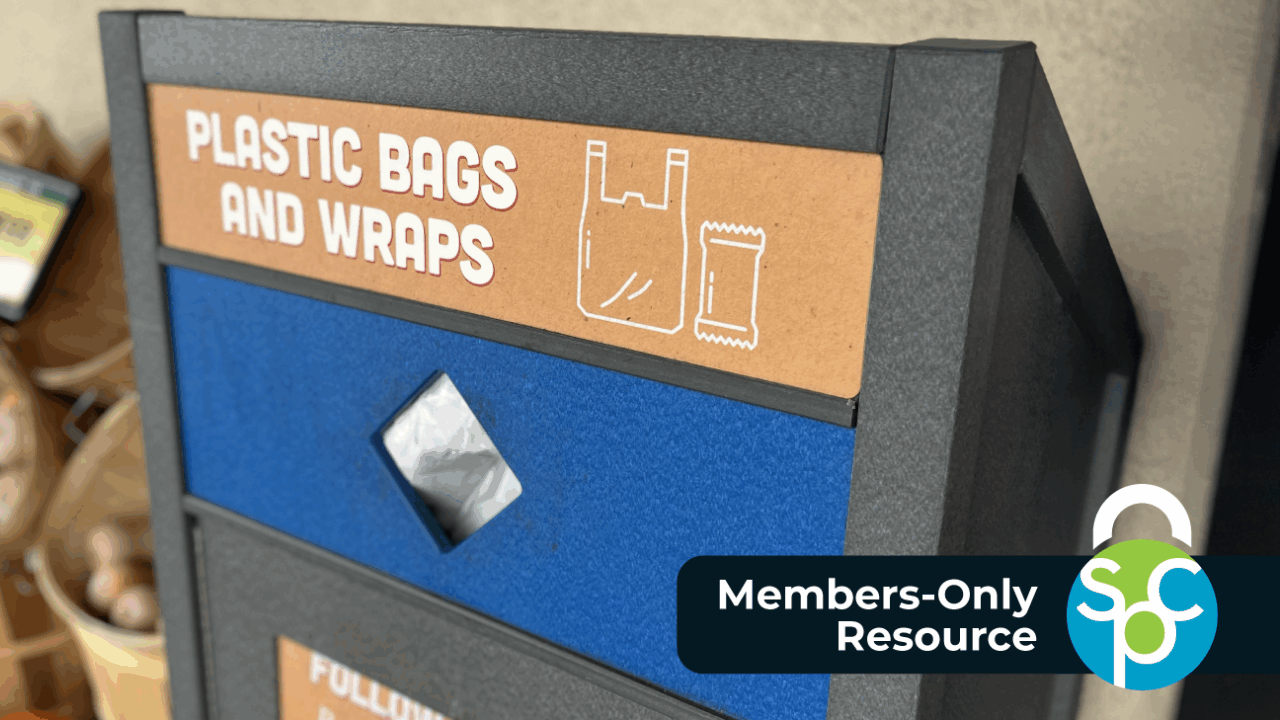
Insights into best practices for Store Drop-off programs to improve plastic film collection.

A resource designed to explain chemical recycling technologies relevant to packaging.

This guide to recycled plastics aims to empower brands and their suppliers with an expanded knowledge of policy and legislation.

This guide to recycled plastics aims to empower brands and their suppliers with the knowledge to improve sourcing of recycled plastic.

This guide to recycled plastics aims to empower brands and their suppliers with the knowledge necessary to expand usage of recycled plastic.

Despite the benefits, flexible packaging is a challenge. Improved recovery is key to closing the loop for this material.

Covering PCR Recycled Content, Chemical Recycling Legislation, EPR, Recovery and Policy.

Case studies of two quick-service restaurant (QSR) chains in Vermont & New York.

This resource evaluates the current state of the Store Drop-off program and explores potential solutions and strategies to address the gaps identified.

The SPC does not support the use of any kind of degradability additives in packaging, including additives that seek to make packaging more degradable.

The Problematic Materials workstream worked with The Plastics Pact Activators to to eliminate problematic and unnecessary resins, components, and formats by 2025.